If you’re a fabricator, contractor, or project manager working with structural steel, there’s one question that pops up in shop floors and job sites across the globe: Can carbon steel coil be welded? As a carbon steel coil supplier who’s spent 12 years matching material to exact project needs, I’ve answered this question hundreds of times—and the answer isn’t a simple yes or no. It depends on which type of carbon steel coil you’re working with, your welding process, and how you prep the material post-weld. Today, I’m breaking down what you actually need to know to get strong, durable welds every time. Carbon Steel Coil
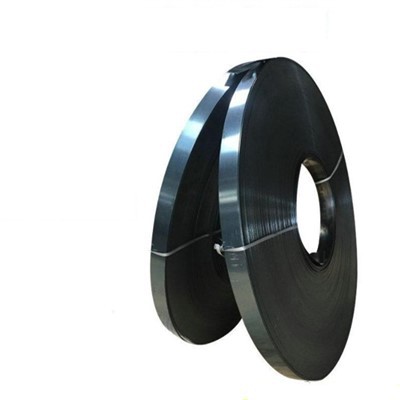
First, let’s start with the basics of carbon steel coil, because not all coils are the same. When I first started in this business, I made the mistake of lumping all carbon steel into one category—and it cost a client a $12,000 project. Back then, I supplied a low-grade hot-rolled carbon steel coil for a bridge beam splice, thinking carbon steel is just carbon steel. Turns out, that coil had high residual sulfur, which made it prone to hot cracking during welding. That’s when I learned: carbon steel is defined by its carbon content, but impurities and manufacturing processes shape how it behaves. For context, carbon steel coils are categorized into three main groups: low-carbon (up to 0.30% carbon), medium-carbon (0.30–0.60% carbon), and high-carbon (over 0.60% carbon).
Low-carbon steel is the workhorse of welding—this is the stuff you use for car bodies, pipes, general structural parts. It’s soft, ductile, and has minimal impurities, so it welds like a dream. Medium-carbon steel is a step up in strength, used for parts like gears or heavy structural supports, but it’s harder to weld because higher carbon content increases the risk of martensite formation—a brittle, hard crystal structure that makes welds crack easily. High-carbon steel is the toughest and most brittle, used for tools or heavy machinery parts, and welding it is generally not recommended unless you have specialized processes. That initial mistake I made? It was low-carbon, but the residual sulfur made it behave like a mid-grade, because some manufacturers cut corners on purification. That’s why quality testing from your supplier matters, more than just the mill spec.
Now, the core question: Can carbon steel coil be welded? Short answer: yes, most grades, but with caveats. The real test is not just if it can be welded, but if the weld will hold up to your project’s demands. Let’s walk through the process from prep to post-weld, because that’s where most people go wrong.
First, pre-weld prep. This is non-negotiable for carbon steel coil, especially if it’s been sitting in a warehouse or has a mill scale (that dark, flaky oxide layer on hot-rolled coils) or oil from the manufacturing process. I once had a client try to weld a coil without removing mill scale—they ended up with a porous weld, because the scale trapped gas bubbles that weakened the joint. For low-carbon coil, you just need to grind or wire-brush the weld area to remove any debris, mill scale, or oil. For medium-carbon, you’ll want to clean the area and often preheat the coil to 200–400°F (90–200°C) to slow the cooling rate after welding, which reduces that brittle martensite formation. I always tell clients to ask their coil supplier for preheating guidelines—different grades have different thresholds, and a good supplier will have that on hand, not just a generic spec sheet.
Next, welding processes. Some methods work better for carbon steel coil than others. MIG (Metal Inert Gas) welding is probably the most popular for carbon steel, especially for low to medium thickness coils. It’s fast, easy to control, and works great on thin gauge coils (like 16 gauge up to ¼ inch, which is standard for most general fabrication). TIG (Tungsten Inert Gas) is another option, if you need a super clean, precise weld—good for parts like sheet metal enclosures or custom structural details, but it’s slower and requires more skill than MIG. Stick welding (SMAW) works too, especially for thick gauge coils, but it’s messier and produces more spatter. For high-carbon coil, if you must weld, you’d usually use a process called gas tungsten arc welding with a special filler metal, but again, that’s a niche application. And here’s a pro tip from my 12 years: never use a stainless steel filler for carbon steel welds. It might seem like a workaround, but it can cause galvanic corrosion down the line, which will destroy your joint faster than any structural load.
Then there’s the big one: weld quality and common problems. Even with perfect prep and the right process, carbon steel coil welds can go wrong if you don’t watch for a few key issues. Hot cracking is the most common, especially in low-carbon coils with high sulfur or phosphorus, as I learned with that bridge project. The impurities lower the melting point of the weld, so when it cools, it contracts and cracks right at the weld line. Cold cracking is another risk, mostly in medium and high-carbon steel, when the weld cools too fast and forms martensite. To avoid that, preheating, interpass temperature (keeping the weld area between passes at the same temp as preheat), and post-weld heat treatment (PWHT) are your best friends. PWHT is when you heat the weld area after welding to 1100–1200°F (590–650°C) and let it cool slowly—it relieves stress and breaks down that brittle martensite. For a lot of structural projects, this is required by building codes, so don’t skip it.
Wait, but what about cold-rolled vs. hot-rolled carbon steel coil? That’s another detail I see clients mix up all the time. Cold-rolled coil is thinner, smoother, has tighter dimensional tolerances, and lower carbon content than hot-rolled, so it’s even easier to weld—great for parts where appearance matters, like cabinets or trailer sides. Hot-rolled is thicker, cheaper, and has a rougher surface, so it’s better for structural welds, but you have to deal with mill scale. I once had a client try to use cold-rolled coil for a load-bearing beam splice—they cut the corners on preheating, and the weld failed a load test within a month, because cold-rolled can have more residual stress from the manufacturing process, so even though it’s low-carbon, it needs a bit more care during welding. That’s why knowing exactly which grade of coil you’re using is half the battle.
Now, as a carbon steel coil supplier, here’s what I do to make sure my clients don’t run into these issues. I don’t just sell coil and hand off a spec sheet. Every coil I supply comes with a material test report (MTR) that lists carbon content, sulfur, phosphorus, and tensile strength—no vague “carbon steel” label. For example, if a client is working on a residential deck (low-stakes, general structural), I’ll point them to our A36 low-carbon hot-rolled coil, which has 0.29% carbon, low sulfur, and is perfect for MIG welding with ER70S-6 filler. If they’re working on a heavy-duty agricultural plow (high-stakes, wear-resistant), I’ll suggest our A572 grade 50 medium-carbon coil, which has higher strength but needs preheating and PWHT. I also offer free technical consultations to go over their welding setup—what gauge they’re working with, what process they use, and tailor the coil grade and prep advice to their project. I’ve found that a little time upfront saves clients thousands in rework later.
Let’s talk about real-world examples, too. Last year, I worked with a small fabrication shop that was struggling with weld failures on a fence project. They’d been buying the cheapest carbon steel coil they could find from a big-box supplier, which had high sulfur content. We switched them to our A36 low-carbon coil with an MTR, showed them how to grind the mill scale, and recommended MIG welding with 0.035 inch ER70S-6 wire. Their failure rate dropped from 12% to zero, and they finished the project 2 days faster because the welds went smoother. Another client: a bridge construction crew that had tried welding medium-carbon coil without preheating. They called me panicking when their first test weld cracked. We sent a technician to the site to walk them through preheating with a propane torch, adjusted their filler metal to E7018 (better for medium-carbon), and after that, all their welds passed the load test.
Common myths, too. I hear all the time: “Carbon steel coil is too thin to weld.” No—coil thickness ranges from 0.010 inch (foil) up to 0.5 inch (plate-grade), and even the thinnest gauge can be welded with TIG or MIG, as long as you use the right amperage (lower amperage for thin material, so you don’t burn through). Another myth: “You can’t weld carbon steel and stainless steel.” Well, you can, but you have to use a special filler metal (like 309L) and take steps to prevent galvanic corrosion—but that’s a side note, mostly, our question is about carbon steel coil, so just know that mixing metals adds a layer of complexity.
So, to circle back: Can carbon steel coil be welded? The answer is a resounding yes—when you choose the right grade, prep properly, use the right welding process, and follow post-weld treatments. The biggest mistake I see is genericity: treating all carbon steel coil the same, skipping preheating, or using cheap fillers that don’t match the material. As a supplier, my job isn’t just to deliver coil—it’s to make sure it works for your project, whether that’s a 100-unit housing development or a custom metal art piece.
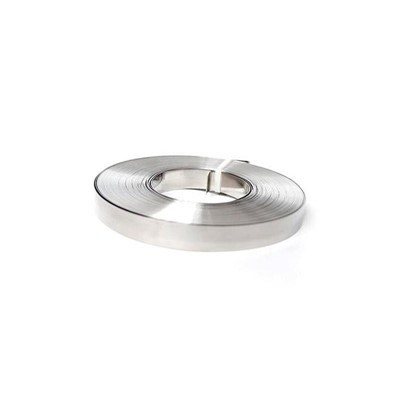
If you’re gearing up for a project and need the right carbon steel coil, or have questions about welding a specific grade, I’m here to help. Whether you’re sourcing for thin gauge sheet metal or thick structural components, we can match the coil to your needs and share all the technical details to make your welds strong and long-lasting. Reach out to start a conversation about your requirements, and let’s make sure your next project avoids the mistakes I learned early on.
Stainless Steel Bar References
AWS D1.1/D1.1M: Structural Welding Code – Steel, American Welding Society
ASM International. (2019). Welding of Carbon Steels. ASM Handbook, Volume 6: Welding, Brazing, and Soldering
Steel Tank Institute. (2021). Guidelines for Welding Carbon Steel Coil in Structural Fabrication
Shanxi Midas Industrial Co., Ltd.
We’re known as one of the most professional carbon steel coil manufacturers and suppliers in China. With abundant experience, we warmly welcome you to buy cheap carbon steel coil made in China here from our factory. For price consultation, contact us.
Address: 28th, Huanqiu Jinrong Zhongxin, Xieyuan Road, Changfeng Business District, Taiyuan City, Shanxi Province, China
E-mail: midassteel@163.com
WebSite: https://www.midassteel.com/
