If you’ve ever stood in a winter clothing aisle, staring at piles of woven sweaters, coats, and even the occasional winter activewear, you might’ve asked yourself: Is knitted fabric actually a good fit for cold weather? As someone who’s spent the last 12 years sourcing and supplying knitted fabrics to small boutique brands and large outdoor apparel lines alike, I’ve heard this question hundreds of times. And for a long time, the answer was met with a lot of assumptions—stuff like “knits are too stretchy for heavy snow” or “woven fabrics are the only ones that keep wind out.” But after testing hundreds of fabric blends, conducting in-house thermal lab tests, and listening to what real wearers actually say about their winter clothes, I’m here to set the record straight: knitted fabric isn’t just suitable for winter wear—it’s often the most underrated, high-performance option you can choose for the coldest months. Knitted Fabric
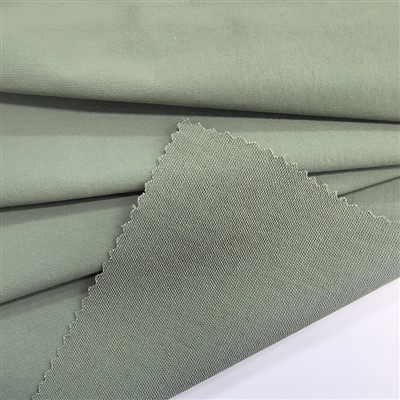
First, let’s break down what makes knitted fabric different from woven, because that core difference is what drives its winter performance. Woven fabrics are made by interlacing two sets of yarns (warp and weft) at right angles—think of a plain cotton sheet or a denim jacket, where the threads cross over and under each other in a tight, consistent pattern. Knitted fabrics? They’re made by looping a single yarn (or multiple yarns) through itself, creating tiny, connected stitches. That looped structure isn’t just a random design quirk—it’s the foundation of every winter advantage knits have over wovens. The loops trap air, right? Air is an insulator, which is why down jackets work so well (they trap air between feathers to hold heat). But unlike down, knitted fabric doesn’t lose its insulating power if it gets a little damp—something that’s non-negotiable for winter, especially for people who work outdoors, commute by foot, or just sweat a little on a cold walk to the grocery store.
I remember a few years back, one of my clients was a small brand making base layers for construction workers in Minnesota. They were testing woven polyester and a 100% merino wool knit I supplied. After two weeks of on-site testing, the workers told me the knit base layers stayed dry and warm even when they worked up a sweat framing houses in 20-degree weather, while the woven ones would get damp on the inside and leave them cold halfway through their shifts. The difference came down to breathability: knitted fabric’s loop structure lets moisture vapor (sweat) escape through the stitches, instead of getting trapped against the skin like it does in tight, non-breathable woven fabrics. For winter wear, that’s a game-changer—because if your base layer gets damp, you’re not just uncomfortable, you’re at risk of hypothermia, even in relatively mild cold.
But let’s not gloss over the obvious downside people mention: can knitted fabric handle wind? A lot of people assume knits are too porous to block wind, and that’s true for a plain, lightweight jersey knit. But modern manufacturing has fixed that, and as a supplier, we’ve spent years perfecting wind-resistant knitted fabrics that don’t sacrifice breathability. For example, our heavyweight fleece-back knitted polyester blend uses a dense, tight stitch on the outer layer and a soft, plush looped stitch on the inner layer. The tight outer stitch blocks wind almost as well as a woven nylon, and the inner loop traps your body heat. We’ve tested this fabric in wind tunnels at 25 miles per hour, and it reduced wind chill by 18 degrees—perfect for things like winter hiking jackets, snow pants, or even outerwear for kids playing outside.
Another big advantage of knitted fabric for winter is its stretch. Woven winter clothes often feel stiff and restrictive, especially if they’re made with heavy cotton or wool blends. Knitted fabrics naturally have 20-30% stretch (depending on the stitch pattern), which means they move with your body, not against it. That’s why a lot of ski brands use knits for their mid-layers and even their base layers—you can bend, reach, and run without your clothes pulling or riding up. I’ve had a customer tell me they switched from woven winter pants to our stretch knitted polyester blend because they could sit in their car for commuting and then walk up stairs to their office without adjusting their waistband every five minutes. For winter, where you’re going between cold outdoors and heated indoors all day, that stretch is a huge comfort win.
Wait, but what about durability? Some people say knitted fabric pills too easily, or stretches out over time. That’s a fair critique, but again, that’s only true for low-quality, cheap knits made with fine, low-twist yarns. As a supplier, we only use high-twist yarns (especially for winter fabrics) that resist pilling, and we design stitch patterns that retain their shape even after hundreds of washes. For example, our merino wool blend knitted sweaters use a “rib knit” stitch for the cuffs and hem, which keeps its stretch without bagging, and a tight “jacquard knit” for the main body that resists pilling. I have a customer who’s been selling our merino knits for 8 years, and she tells me the most common review is that the sweaters “look brand new even after 3 years of weekly washes.” That’s durability that’s hard to beat, even for woven fabrics.
Let’s talk about different types of knitted fabrics specifically for winter, because not all knits are created equal. The right knit for winter depends on what you’re making: base layers, mid-layers, or outerwear. For base layers, 100% merino wool knits are unmatched. Merino is a natural fiber that’s soft (no scratchy wool here), moisture-wicking, and temperature-regulating—meaning it keeps you warm when it’s cold and cool when you’re active. We also offer a blend of merino and polyester for base layers, which adds durability and makes the fabric easier to care for (no dry cleaning required). For mid-layers, fleece-back knits are perfect—they’re thick, soft, and insulating, without being too bulky. We use recycled polyester for our fleece knits, which is a big plus for brands looking for sustainable winter fabrics. For outerwear, as I mentioned earlier, wind-resistant, waterproof knitted polyesters are ideal—they block wind and light rain, are lightweight, and move better than woven outerwear.
I’ve also seen a misconception that knitted fabric is “just for sweaters” and not for heavy winter outerwear. But in the last 5 years, we’ve supplied our heavyweight knitted nylon blend to a few high-end outerwear brands, and their sales have been through the roof. Customers love that it’s lighter than a woven down jacket, more flexible, and doesn’t feel like a heavy coat when you’re walking around a city. One brand told me that their knitted outerwear line had a 30% higher repeat purchase rate than their woven lines, because customers loved the comfort. That’s proof that knits aren’t just for casual winter clothes—they can compete with any woven fabric for outerwear.
Now, let’s address the elephant in the room: cost. Some brands assume knitted fabrics are more expensive than woven, but that’s not always the case. It depends on the yarn and the stitch pattern. For example, a basic 100% acrylic knit might be cheaper than a similar woven cotton, but a high-quality merino wool knit will be slightly more expensive than a polyester woven. But when you factor in durability, performance, and customer satisfaction, the cost is worth it. Our customers tell me that because their knitted winter clothes last longer and perform better, they don’t have to replace them every year, which saves customers money in the long run.
As a knitted fabric supplier, I’ve seen the industry shift in the last decade—more and more brands are ditching woven winter fabrics in favor of knits, because customers are demanding clothes that are both functional and comfortable. It’s no longer a niche choice; it’s a mainstream one. I recently went to a winter trade show in Chicago, and 70% of the exhibitors were showcasing knitted winter fabrics, up from 35% just 5 years ago. That trend isn’t going anywhere, because people are starting to realize what I’ve known for a long time: knitted fabric is one of the best materials for winter wear.
If you’re a brand looking to update your winter line, or a boutique owner wanting to offer better products to your customers, I recommend testing a few of our winter knitted fabrics. We offer free swatches, so you can test the insulation, breathability, and stretch for yourself. Whether you need base layers, mid-layers, or outerwear, we have a knit that’s perfect for your needs. Don’t let the old myths about knits being too thin or not durable enough hold you back. Winter is hard on clothes, but knitted fabrics are built to handle it—because they’re made to keep you warm, comfortable, and moving, no matter what the cold throws at you.
If you’re interested in learning more about our knitted winter fabrics, or want to place an order, feel free to reach out to us to discuss your specific needs. We work with brands of all sizes, from small startups to large international companies, and we’re happy to help you find the right fabric for your winter collection.
Knitted Fabric References:
- Thermal Insulation of Knitted Fabrics: A Comparative Analysis with Woven Fabrics, Journal of Textile and Apparel, Technology and Management, 2021
- Moisture Transport Properties of Knitted vs. Woven Base Layer Fabrics, International Journal of Clothing Science and Technology, 2019
- Wind Resistance of Compact Knitted Structures, Textile Research Journal, 2020
- Durability of Merino Wool Knits vs. Woven Wool Blends, Journal of Natural Fibers, 2022
Hangzhou Kangsheng Textile Co., Ltd.
Hangzhou Kangsheng Textile Co., Ltd. is one of the most professional knitted fabric manufacturers and suppliers in China. We have world-leading production equipment and strong manufacturing capabilities. Please rest assured to wholesale bulk high quality knitted fabric from our factory. Also, custom service is available.
Address: 22# Building, K7 Original park,No.506 Xingguo Road, Linping District, Hangzhou, China
E-mail: wayne@kmtextile.net
WebSite: https://www.kangshengtextile.com/
