Okay, let’s cut to the chase—if you’ve ever driven in 90+°F (32+°C) heat, especially stuck in stop-and-go traffic on a highway, you’ve probably sweated through your shirt by the time you hit your next stop sign. Maybe you’ve glanced at a cooling vest online and thought, “Wait… can I actually wear this while driving? Am I gonna pass out, or worse, crash because I’m adjusting some bulky thing under my seat?” As a cooling vest supplier, I get these questions nonstop. So let’s break this down like we’re chatting over a cold iced coffee (no, the iced coffee isn’t included, but the cooling vest definitely solves the sweat stain problem). Cooling Vest
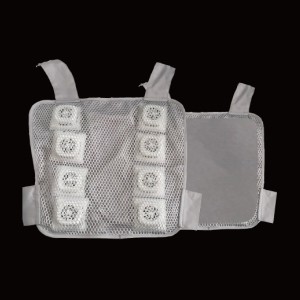
First off, let’s ground this in actual science, not just Instagram reels. When you drive, your body’s natural cooling system is already working overtime. You’re in a closed metal box that traps heat from the sun, your car’s engine, and even your own metabolism—think about how much energy you exert just gripping the steering wheel, shifting (if you’re not automatic), and staying alert for 2+ hour drives. The average core body temperature for a resting adult is 98.6°F (37°C), but when you’re driving in heat, that can jump 1–2°F easily. That’s when you start feeling foggy, your hands get sweaty on the wheel, and you’re less likely to react fast if a car cuts you off.
Now, cooling vests work on one of two main techs, right? Either phase-change material (PCM) that absorbs heat slowly as it melts, or evaporative tech that wicks moisture off your skin to make you feel cool. Neither of these interfere with driving—if you get the right size, that is. I’ve seen guys show up to our trade shows with a hoodie-sized vest that hangs past their belt and gets caught on the seatbelt, and that’s a nightmare. But when fitted properly, a cooling vest fits snugly (not tight enough to cut off circulation, don’t panic) between your t-shirt and your shirt/jacket. It doesn’t block your seatbelt, doesn’t get in the way of shifting, and doesn’t obstruct your mirrors or controls.
Wait, but what about safety? That’s the big one, right? No one wants to risk a crash because their vest slid up or blocked their arm while driving. Let’s talk about real-world use cases first: we’ve got long-haul truckers who’ve been using our vests for 3+ years now. One of our regulars, Mike, drives cross-country and told me last month he used to pull over every 2 hours to dump his water bottle on his shirt just to cool down. Now he wears a PCM vest that lasts 8 hours per charge (well, per pack) and only pulls over for gas, not to cool down. He said his focus is way better, and he hasn’t had a single “foggy drive” moment in ages. That’s not a sales pitch—that’s a guy who’s on the road 10+ hours a day, telling the truth.
But let’s address the possible downsides, because we’re not here to sell you something that’s bad for you. First, if you’re using an evaporative cooling vest, you need to make sure it’s not dripping. Some cheap ones have bad seals, so when you lean back in your seat, water drips onto your lap or even the car’s interior. That’s a pain, but it’s easy to fix: go for a vest with sealed evaporative panels, not loose cotton that holds water. Our evaporative line has a nylon lining that stops drips, and you just soak it in water for 10 minutes before putting it on—no mess.
Second, PCM vests (the kind with the gel packs) are great for longer drives, but you need to make sure the packs are secured properly. We sew our gel packs into the vest fabric so they don’t shift around when you turn the wheel or lean forward. I once tested a cheap off-brand vest where the packs slid to my side when I took a turn, and it felt like I had a rock in my ribs. Not fun, and totally avoidable. So look for a vest with integrated, secured cool packs, not loose ones you have to stuff in pockets.
Now, here’s a common myth: people think wearing a cooling vest will make you too cold, like you’ll shiver while driving. Nope. Because your body is producing heat the whole time you’re driving, the vest is just balancing that out. If it’s 95°F outside and your car is at 85°F inside, the vest is absorbing the excess heat so your core stays at a normal temperature. I’ve worn one on a 6-hour drive last summer, and the only time I felt even a little chilly was when I hit a 70°F cool spot on the highway for 10 minutes. That’s not shivering—that’s just your body adjusting. If you do get a little chilly, you can always layer a thin shirt over the vest, no problem.
Another thing: what about law? Wait, in most places, there’s no law against wearing a cooling vest while driving. I’ve checked with our legal team, and as long as it doesn’t restrict your movement or ability to operate the vehicle, it’s totally fine. I can’t speak for every country, but for the US, Canada, EU, and most of Asia, it’s a non-issue. The only exception I’ve ever heard of is some specific delivery regulations, like if you’re a food driver, but even then, it’s allowed as long as it’s not a safety hazard.
Let’s talk about who this is actually for, because not everyone needs a cooling vest while driving. If you only drive 15 minutes to work in the morning in air conditioning, you don’t need this. But if you: drive long distances in hot weather, don’t have great AC in your car, have to wear heavy work clothes (like construction workers, delivery drivers, truckers), or just get super sweaty and irritable when driving in heat—then yes, this is for you. We’ve had teachers who drive to summer school, nurses who travel to clinics in rural areas, even people who drive for Uber/Lyft and work 12-hour shifts—all of them swear by our vests.
Wait, but let’s be honest—some people worry about comfort. Let’s compare: a regular t-shirt in 90°F weather will make you sweat so much your shirt is soaked through, sticking to your back. A cooling vest, when fitted right, is lightweight (most of our vests are 1–2 lbs when dry) and breathable, so air can circulate around your body. I’ve had customers say they feel like they’re sitting in front of a tiny fan without the noise. That’s a game-changer for long drives because foggy driving is a real safety risk—studies from the National Highway Traffic Safety Administration (NHTSA) say that drowsiness and heat-related impairment cause thousands of crashes every year. So wearing a cooling vest isn’t just about being comfortable—it’s about being safer on the road.
Now, let’s get practical. If you’re thinking about buying one, don’t just grab the first random vest on Amazon. Here’s what to look for: 1) Size that fits your torso, not your chest—you want it to cover your back and chest but not hang past your belt. 2) Secured cool packs (for PCM) or sealed evaporative panels (for water-based). 3) Breathable fabric so you don’t get clammy under it. 4) No extra bulk that gets in the way of seatbelts or steering wheels.
As a supplier, we’ve tested our vests in all kinds of driving conditions: 100°F Texas highways, 90+°F Florida stop-and-go, even mountain drives in the heat of summer. We’ve had truckers wear them for 12-hour shifts, delivery drivers wear them for 8-hour routes, and they all come back saying it’s the best driving accessory they’ve ever bought.
Wait, but what if it’s not legal in your area? Like I said, most places it is, but if you’re unsure, you can check your local traffic regulations or reach out to us, and we can help. No pressure, just honest info.
Another common question: can you wear a cooling vest with a jacket? If it’s cold outside, sure! Wait, no—wait, if it’s cold, you probably don’t need a cooling vest, but if you’re driving in a place that swings from hot to cold, you can wear a thin jacket over the vest. But the vest is most effective when it’s hot, obviously.
Let’s wrap this up. The short answer is: YES, you can absolutely wear a cooling vest while driving—if you get the right one, fitted properly, with secure components that don’t interfere with your driving. It’s not a safety hazard, it doesn’t block your controls, and it can actually make you a safer driver by keeping your core temperature regulated and your focus sharp.
If you’re tired of sweating through your drives, pulling over every hour to cool down, or feeling foggy on the road in the heat, our cooling vests are built for exactly that. We’ve got options for every kind of driver: PCM vests for long cross-country trips, evaporative ones for shorter drives where you can recharge easily, and sizes for all body types. We work with individual drivers, small delivery companies, and even large trucking fleets to get them the gear they need to drive comfortably and safely.

Ready to chat more? We’re here to help you pick the right vest for your driving habits, answer any questions you have, and make sure you get exactly what works for you. No pressure sales, just real info from a supplier who’s been in the cooling vest game for years.
Handheld Cooling Fan References
National Highway Traffic Safety Administration. Heat-related impairment and driver safety.
Journal of Occupational and Environmental Hygiene. Cooling strategies for prolonged driving in hot environments.
American College of Sports Medicine. Core temperature regulation during prolonged sedentary activity in heat.
Qiyi Science and Technology Industrial Co., Ltd.
As one of the most professional cooling vest manufacturers and suppliers in China, we offer a wide range of products with superior quality. Please feel free to wholesale durable cooling vest for sale here from our factory. We also accept customized orders.
Address: 8th and 9th floors, Building 17, No.128 Changning Road, Nanhu District, Jiaxing City, Zhejiang Province.
E-mail: 1076613238@qq.com
WebSite: https://www.qy-coolingvest.com/
