Hey there! I’m a supplier in the caster business, and I often get asked, "How do casters work?" Well, it’s a pretty interesting topic, and I’m gonna break it down for you in this blog. Casters

The Basics of Casters
Let’s start with the basics. A caster is a wheel mounted on a fork or a bracket, which allows objects to move around easily. You’ve probably seen them on office chairs, shopping carts, and industrial equipment. They’re everywhere!
The main components of a caster are the wheel, the fork, and the mounting plate. The wheel is what rolls on the surface, the fork holds the wheel in place, and the mounting plate attaches the caster to the object. Simple, right?
How Wheels Roll
The wheel is the heart of the caster. It’s designed to roll smoothly on different surfaces. The material of the wheel plays a big role in how it works. For example, rubber wheels are great for indoor use because they provide good traction and are quiet. They can grip the floor well, which helps prevent slipping.
On the other hand, polyurethane wheels are more durable and can handle heavier loads. They’re often used in industrial settings where there’s a lot of wear and tear. Metal wheels, like steel or cast iron, are extremely strong and can support very heavy weights, but they can be noisy and may damage the floor if not used properly.
The size of the wheel also matters. Larger wheels can roll over obstacles more easily than smaller ones. If you’re moving a heavy object over a rough surface, a bigger wheel will make the job a lot easier.
The Fork and Its Function
The fork is like the wheel’s home. It holds the wheel securely and allows it to rotate freely. There are different types of forks, depending on how the caster is supposed to move.
A swivel fork is one of the most common types. It allows the caster to rotate 360 degrees, which gives you a lot of flexibility when moving an object. You can easily change the direction of the object without having to lift or reposition it. This is why swivel casters are often used on office chairs and shopping carts.
A rigid fork, on the other hand, only allows the wheel to move in a straight line. Rigid casters are usually used in combination with swivel casters. For example, on a four – caster setup, you might have two swivel casters at the front and two rigid casters at the back. This combination gives you both stability and maneuverability.
Mounting Plates and Attachment
The mounting plate is what connects the caster to the object. There are different ways to attach a caster using a mounting plate. The most common method is using bolts or screws. You simply line up the holes in the mounting plate with the holes on the object and secure them with the appropriate fasteners.
Some casters also come with a stem instead of a mounting plate. A stem can be inserted into a hole on the object, providing a quick and easy way to attach the caster. This type of attachment is often used on furniture and light – duty equipment.
Load Capacity
One of the most important factors to consider when using casters is the load capacity. Every caster is designed to support a certain amount of weight. If you exceed the load capacity, the caster may break or wear out quickly, which can be dangerous.
The load capacity depends on several factors, including the size of the wheel, the material of the wheel and the fork, and the design of the caster. For example, a larger wheel with a thick rubber tread and a sturdy fork can support more weight than a small plastic wheel on a flimsy fork.
When you’re choosing casters for your application, make sure to calculate the total weight of the object and any additional loads. Then, select casters with a load capacity that is higher than the total weight. This will ensure that your casters work properly and last a long time.
Maneuverability and Steering
As I mentioned earlier, swivel casters give you great maneuverability. But how do they actually work when it comes to steering? Well, when you push or pull an object with swivel casters, the wheels will naturally turn to follow the direction of the force.
The steering of swivel casters can be affected by several factors. The friction between the wheel and the surface is one of them. If the surface is too slippery, the wheels may not turn as easily. On the other hand, if the surface is too rough, the wheels may have a hard time rolling smoothly.
The design of the swivel mechanism also plays a role. A well – designed swivel mechanism will allow the caster to turn smoothly with minimal resistance. Some high – end swivel casters even have features like bearings that reduce friction and make steering easier.
Caster Maintenance
To keep your casters working properly, you need to do some maintenance. First of all, make sure to clean the wheels regularly. Dirt, debris, and grease can build up on the wheels, which can affect their performance. You can use a mild detergent and water to clean the wheels, and then dry them thoroughly.
Check the fork and the mounting plate for any signs of damage or wear. If you notice any cracks or loose parts, replace the caster immediately. Also, lubricate the swivel mechanism if it’s a swivel caster. This will help the caster turn more smoothly and reduce wear and tear.
Why Choose Our Casters
Now that you know how casters work, let me tell you why you should choose our casters. We’ve been in the business for a long time, and we know what it takes to make high – quality casters.
Our casters are made from the best materials. Whether you need rubber wheels for a quiet and smooth ride or polyurethane wheels for heavy – duty applications, we’ve got you covered. We also offer a wide range of sizes and load capacities, so you can find the perfect caster for your needs.
Our manufacturing process is top – notch. We use the latest technology and quality control measures to ensure that every caster we produce meets the highest standards. And we’re constantly innovating to improve the performance of our casters.
Let’s Talk Business
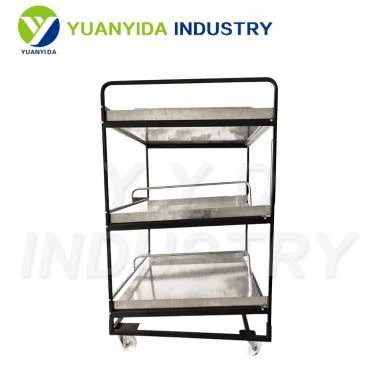
If you’re in the market for casters, I’d love to have a chat with you. Whether you’re a small business looking for casters for your furniture or a large industrial company in need of heavy – duty casters, we can help. We offer competitive prices, excellent customer service, and fast delivery.
Casters So, don’t hesitate to reach out to us for a quote or to discuss your specific requirements. We’re here to make the process as easy as possible for you.
References
- "Casters and Wheels: A Technical Guide" by various industry experts.
- Manufacturer’s manuals and product specifications from leading caster companies.
Qingdao Yuanyida Industrial and Trade Co., Ltd.
Qingdao Yuanyida Industrial and Trade Co., Ltd. is one of the most professional casters manufacturers and suppliers in China. Feel free to wholesale high quality and hot selling casters from our factory. There a wide selection of logistics trolleys at your choice. Also, customized service is available.
Address: Factory Add: No.1 Yunxing Rd, Yinghai Industrial Park, Jiaozhou, Qingdao, CHINA 266300
E-mail: info@qd-yuanyida.com
WebSite: https://www.yydindustry.com/
