Alright, let’s cut right to the chase. If you’re an energy storage battery supplier (that’s me, for context—we’ve been cranking out lithium-ion units for commercial and residential setups for a decade), you probably hear this question nonstop: “Why not something other than batteries for storing power?” Let’s be real—batteries get all the hype, but they’re not the only game in town. And let’s be clear: this isn’t me trying to shade our own products (we stand by them); it’s about giving you the full picture, because sometimes the “alternatives” make way more sense for specific jobs. Energy Storage Battery
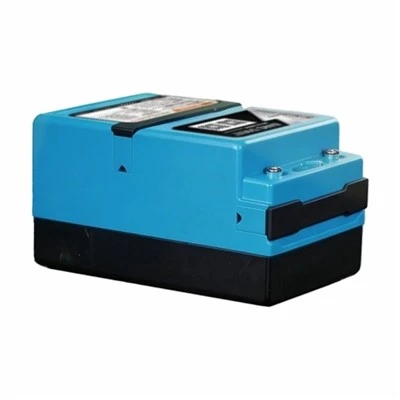
First, let’s set the scene. A lot of folks associate energy storage with big, boxy lithium-ion packs on rooftops or in utility yards. But every grid is different, every use case is different—someone off-grid in a mountain town doesn’t have the same needs as a factory that runs on solar during the day. So when someone says “alternative to batteries,” they’re not just talking about swapping out a lithium-ion pack—they’re talking about methods that store power in a totally different way. Let’s walk through the most legit ones, no jargon, I promise.
First up: pumped hydro energy storage (PHES). This is the old guard—like, it’s been around since the 1890s, so it’s not a new trend. Here’s how it works: you’ve got two reservoirs, one higher up, one lower. When the grid has extra power (say, midday sun on a solar farm, or off-peak night when demand is low), you use that power to pump water from the lower reservoir up to the higher one. When the grid needs more power (evening, when everyone’s turning on AC), you open the dam and the water flows back down, spinning turbines to make electricity. No fancy chemicals, just gravity and water.
Wait, but why is this an alternative to batteries? Because it’s way cheaper for huge, long-duration storage. Like, utility-scale projects—PHES accounts for like 95% of all global energy storage capacity right now, last I checked. We’re talking gigawatts here, not the megawatts that most batteries do. But here’s the catch: you need specific geography. You’ve gotta have two nearby bodies of water with a height difference—no good if you’re in a flat state like Florida, or a desert. So it’s not a one-size-fits-all, but it’s a workhorse.
Next, compressed air energy storage (CAES). This one’s cool—you store energy as compressed air in an underground cavern, or even a tank. When you have extra power, you run a compressor that crushes air into that cavern (usually salt caves, which are cheap and easy to repurpose). When you need power, you release the compressed air, heat it up (sometimes with natural gas, though there’s all-electric versions now), and blow it through a turbine to make electricity.
There are two types: diabatic (old school, uses gas for heat) and adiabatic (newer, stores the heat from compression so you don’t need gas). Adiabatic is way better for emissions. Like, a big CAES plant can store hours and hours of power—again, utility-scale. Downside? You need those underground caverns, so again, geography matters. But some smaller versions are popping up above ground for industrial use, too.
Then there’s thermal energy storage (TES). This one’s where it gets fun—you store energy as heat or cold, not electricity. Let’s break it down: there’s two main types, latent heat and sensible heat. Sensible heat is just heating up a material, like water, sand, or rock. Latent heat is when a material changes state—like melting salt, which stores a ton of heat without getting way hotter.
For example, some solar thermal plants use molten salt to store heat from the sun all day, then make steam to spin turbines at night. No batteries needed there—they’re storing the sun’s heat directly. Then there’s residential TES: some people use ice storage, where you make ice at night (when electricity is cheap) and use that ice to cool buildings during the day. Or hot water tanks for space heating. For industries that need constant heat—like a factory making steel—TES is way more efficient than storing electricity in batteries, because you don’t lose as much energy converting it back and forth.
Wait, let’s not forget flywheel energy storage. These are like super-fast spinning rotors, usually made of carbon fiber, sealed in a vacuum to cut down on friction. When you have extra power, you spin the rotor faster—so you’re storing energy as kinetic energy. When you need power, you slow the rotor down, and that spinning motion turns a generator to make electricity.
Flywheels are perfect for short-duration, high-power needs—like, smoothing out grid fluctuations, or providing backup for a few seconds (like if a wind turbine drops out suddenly). They’re super fast to respond—like, a millisecond. But they don’t store energy for long—only a few minutes, max. So they’re not replacing big battery packs for all-night storage, but they’re a great complement. We actually work with flywheel companies sometimes for grid projects where we need that quick backup, and it makes our battery systems way more reliable.
Now, let’s be real—none of these are replacing energy storage batteries entirely. Let’s talk about where batteries still shine. Batteries are modular—you can slap a 10kWh pack on a home, or a 100MWh array on a utility lot, and it fits. They work anywhere, no fancy geography. They’re quick to install, no need for reservoirs or caverns. That’s why we’re in this business, that’s why our customers come to us. But these alternatives fill gaps batteries can’t.
Like, if you’re a utility needing to store 100GWh of power for a week, pumped hydro is way cheaper than building a million batteries. If you need to make sure a wind farm doesn’t have lulls in power for a minute, flywheels are better. If you’re a brewery that needs constant hot water for brewing, thermal storage beats electric batteries.
I see a lot of folks online acting like “alternative” means one or the other, but it’s not—It’s a mix. We love when customers come to us with a project that needs both: say, a residential setup with a rooftop solar, a small battery for daily use, and a thermal storage unit for heating the home in winter. Or a commercial warehouse that uses flywheels for power quality and our lithium-ion packs for overnight backup.
Here’s the thing: if you’re evaluating your energy needs—whether you’re a homeowner, a small business, or a utility—you shouldn’t just default to batteries. You should ask: How long do I need to store power? Do I have the space/geography for big-scale stuff? Do I need fast power for a few seconds, or slow power for hours?
For example, a client of ours last year was a dairy farm in Iowa. They needed backup power for their milking machines, which are super sensitive to outages. At first, they thought they just needed our big battery packs. But when we walked through their needs, they also have a lot of waste heat from their milk cooling systems. We suggested adding a thermal storage unit to capture that waste heat, and a small flywheel for instant backup if the grid flickers—so their battery only has to handle long outages, not the quick blips. It saved them 20% on their setup cost, and their uptime went up. That’s the kind of thing you can’t figure out just by googling “energy storage alternatives.”
Now, let’s address the elephant in the room: why do people keep pushing batteries? Because they’re sexy, there’s a lot of marketing, and they’re easy to install. But they have limits. Long-duration storage (more than 8 hours) with batteries gets expensive—you need way more cells, and the degradation hits harder. The alternatives I mentioned—pumped hydro, CAES, TES—do long duration way better, for less money.
Another point: sustainability. Batteries have their own environmental stuff—mining lithium, recycling. Some of these alternatives are way cleaner. Pumped hydro uses existing water systems, CAES uses salt caverns that would otherwise go unused, TES uses materials like sand or salt that are non-toxic. That’s a big deal for customers who are focused on their carbon footprint.
But here’s where I come in—our company’s been around energy storage batteries for years, so we don’t just sell batteries, we give honest advice. If a customer comes to us and their project is a fit for pumped hydro, we’ll tell them to go check out the local PHES projects, not waste money on batteries. If someone needs a quick backup for a few minutes, we’ll mention flywheels. But if batteries are the right call? We’ll hook them up with the right units—no upselling, no B.S.
A lot of our clients are small to mid-sized businesses that don’t have a huge team to figure this out. So that’s why I’m putting this out there: don’t sleep on the alternatives, but don’t write off batteries either. It’s all about matching the method to the need.
If you’re currently evaluating energy storage for your home, business, or utility—whether you’re looking at batteries, or curious about these other options—we’d love to chat. We’ve worked with teams across all these technologies, so we can help you map out what makes sense for your specific situation. No sales pitch, just real talk. Just reach out to us to get the conversation started, and we can walk through your options, no obligation.

At the end of the day, the goal of energy storage is simple: keep power reliable, cut costs, and help the grid go greener. Batteries are a huge part of that, but they’re not the only tool. Knowing the alternatives means you can build a better, more affordable system—one that fits your needs, not a one-size-fits-all marketing plan.
Energy Storage Battery References:
- International Energy Agency (IEA). (2024). Global Energy Storage Outlook.
- U.S. Department of Energy (DOE). (2023). Compressed Air Energy Storage: Technical and Economic Analysis.
- Lawrence Berkeley National Laboratory. (2022). Thermal Energy Storage for Commercial and Industrial Applications.
- Flywheel Institute. (2023). Kinetic Energy Storage for Grid Modernization.
- National Renewable Energy Laboratory (NREL). (2024). Pumped Hydro Storage: Status and Trends.
Suzhou Sanniu New Energy Technology Co., Ltd.
With abundant experience, we are one of the most professional energy storage battery manufacturers and suppliers in China. Please feel free to wholesale advanced energy storage battery in stock here and get quotation from our factory. Welcome to contact us for customized service.
Address: No.319 Laixiu Road, Wujiang District, Suzhou City, Jiangsu Province, China
E-mail: 18913164111@163.com
WebSite: https://www.snliion.com/
