As a supplier of translator devices, I’m often asked about the types of software installed on these devices. In this blog post, I’ll delve into the various software components that make a translator device a powerful and versatile tool for language translation. Translator Device

Operating System Software
The foundation of any translator device is its operating system (OS). Just like your smartphone or computer, a translator device needs an OS to manage hardware resources, run applications, and provide a user – friendly interface.
We typically use lightweight and optimized operating systems for our translator devices. These OSs are designed to consume minimal memory and processing power while ensuring smooth operation. For example, some of our devices are powered by Linux – based operating systems. Linux is an open – source OS that offers high security, stability, and flexibility. It allows us to customize the system according to the specific requirements of the translator device, such as integrating unique input and display features.
Another option we use in some of our higher – end models is an Android – based operating system. Android provides a vast ecosystem of applications and a familiar user interface. It enables users to easily install additional language – related apps from the Google Play Store, such as language learning apps, dictionary apps, and cultural reference apps. This greatly expands the functionality of the translator device beyond basic translation.
Translation Engine Software
The heart of a translator device is its translation engine software. This software is responsible for converting text or speech from one language to another.
We use a combination of rule – based and statistical machine translation (SMT) techniques in our translation engines. Rule – based translation systems rely on pre – defined linguistic rules, such as grammar and syntax rules, to translate text. These systems are very accurate for translating well – structured and formal language. However, they may struggle with more informal or idiomatic expressions.
Statistical machine translation, on the other hand, uses large amounts of previously translated text data to learn patterns and probabilities. By analyzing these patterns, the SMT system can generate translations that are more natural – sounding and context – aware. Our translation engines also incorporate neural machine translation (NMT) technology, which has revolutionized the field of machine translation. NMT uses neural networks to model the entire translation process, resulting in more accurate and fluent translations, especially for long and complex sentences.
Our translation engines support a wide range of languages, including major languages such as English, Chinese, Spanish, French, German, and Arabic, as well as many less – commonly spoken languages. We continuously update our translation engines by adding new language pairs, improving translation quality, and expanding the vocabulary to keep up with the latest language trends.
Speech Recognition and Synthesis Software
In addition to text – to – text translation, many modern translator devices offer speech – to – speech translation capabilities. This requires high – quality speech recognition and synthesis software.
Our speech recognition software is designed to accurately convert spoken words into text. It uses advanced algorithms to handle different accents, speaking speeds, and background noises. We have trained our speech recognition models on a large dataset of diverse voices and speech samples to ensure high accuracy in various real – world scenarios.
Once the spoken words are converted into text, the translation engine processes the text and generates a translation. Then, the speech synthesis software converts the translated text back into natural – sounding speech. Our speech synthesis software uses high – quality voices that are available in multiple languages and styles. Users can choose the voice they prefer, such as a male or female voice, and adjust the speaking speed according to their needs.
User Interface and Interaction Software
The user interface (UI) and interaction software play a crucial role in making the translator device easy to use. Our UI is designed to be intuitive and user – friendly, even for those who are not tech – savvy.
We use touch – screen technology in most of our devices, allowing users to interact with the device simply by tapping, swiping, and typing. The main screen typically displays a large, clear input area where users can enter text or start a voice recording. There are also easy – to – access buttons for selecting languages, switching between translation modes, and accessing additional features.
We also incorporate gesture – based interaction in some of our models. For example, users can shake the device to clear the input or perform a two – finger swipe to switch between different language pairs. These gestures add an extra layer of convenience and make the user experience more engaging.
Additional Software Features
In addition to the core software components mentioned above, our translator devices come with several additional software features to enhance the user experience.
One of these features is offline translation. We understand that users may not always have access to an internet connection, especially when traveling in remote areas. Therefore, our devices allow users to download language packs for offline use. These language packs include translation dictionaries, grammar rules, and speech recognition models, enabling users to perform translations without an internet connection.
Another useful feature is the ability to save and manage translation history. Users can easily review their past translations, which is particularly helpful for learning and reference purposes. We also provide options for sharing translations via email, SMS, or social media platforms, allowing users to communicate their translations with others.
We also integrate cultural and travel – related information into our software. For example, users can access information about local customs, etiquette, and popular tourist attractions in different countries. This not only helps with translation but also enriches the overall travel experience.
Why Choose Our Translator Device Software
Our software is the result of years of research, development, and continuous improvement. We are committed to providing the highest – quality translation services and user experience.
The combination of advanced translation engines, accurate speech recognition and synthesis, and user – friendly interfaces makes our translator devices a reliable choice for both personal and professional use. Whether you are a traveler exploring a new country, a businessperson conducting international meetings, or a student learning a new language, our translator devices can meet your needs.
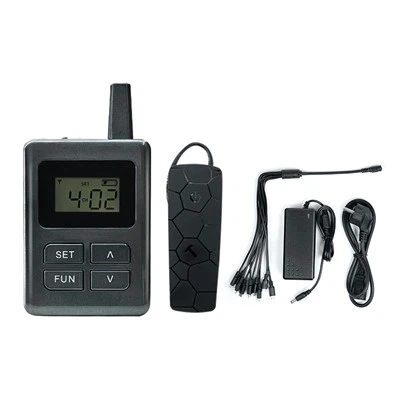
Multichannel Tour Guide System If you are interested in our translator devices, we invite you to contact us for procurement and further discussion. We are more than happy to provide you with detailed product information, pricing, and any other support you may need.
References
- Brown, P. F., et al. (1990). A statistical approach to machine translation. Computational Linguistics, 16(2), 79 – 85.
- Bahdanau, D., Cho, K., & Bengio, Y. (2014). Neural machine translation by jointly learning to align and translate. arXiv preprint arXiv:1409.0473.
- Jurafsky, D., & Martin, J. H. (2022). Speech and Language Processing (3rd ed.). Pearson.
Address: Building C, Yingte, West Yanglin Road, Electromechanical Industrial Park, Hefei High-tech Zone, Anhui, China
E-mail: yingmiguide@gmail.com
WebSite: https://www.yingmiguide.com/
