Hey there! I’m a supplier of low – bed trailers. You know, I get a ton of questions from folks about these trailers, and one of the most common ones is, "Do low – bed trailers require special licenses to operate?" Well, let’s dig into this topic together. Low-bed Trailer
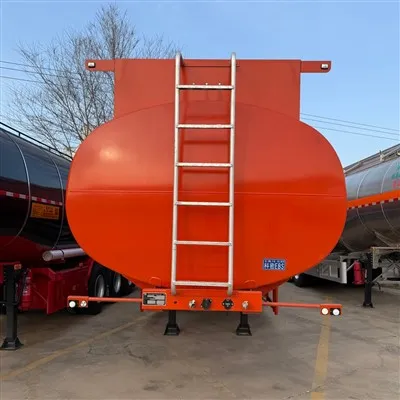
First off, let me tell you a bit about low – bed trailers. These bad boys are designed for hauling heavy and oversized loads. They’ve got a lower deck height compared to regular trailers, which makes it easier to load and transport things like construction equipment, large machinery, or even small buildings. I deal with all sorts of customers, from construction companies to equipment rental firms, who rely on these trailers to move their big stuff around.
Now, back to the license question. The answer isn’t a simple yes or no. It depends on a bunch of factors, like where you’re operating, the weight of the load, and the overall dimensions of the trailer.
In many places, if you’re using a low – bed trailer for personal use or for hauling relatively light loads, you might not need a special license. For example, if you’re just moving a small tractor on your own property or within a short local area, and the total weight of the trailer and the load is within the limits for a regular driver’s license, you’re probably good to go. But don’t just take my word for it. You’ve got to check with your local Department of Motor Vehicles (DMV) or transportation authority.
However, when it comes to commercial use, things get a bit more complicated. Most states and countries have strict regulations for commercial vehicles, especially those carrying heavy or oversized loads. If your low – bed trailer and its cargo exceed a certain weight limit, you’ll likely need a commercial driver’s license (CDL).
The Federal Motor Carrier Safety Administration (FMCSA) in the United States, for instance, has clear rules about CDL requirements. If your vehicle has a gross combination weight rating (GCWR) of 26,001 pounds or more, and you’re using it for commercial purposes, you’ll need at least a Class A CDL. The GCWR is the total weight of the truck, the trailer, and the load. So, if you’re hauling a big piece of construction equipment on a low – bed trailer, and the combined weight reaches or exceeds that 26,001 – pound mark, you’ve got to have the right CDL.
Another factor is the dimensions of the load. If your load is wider, longer, or taller than the standard limits, you might need special permits in addition to a CDL. Oversized loads can be a real headache for transportation, and the authorities want to make sure they’re being moved safely.
Now, let’s talk about the different types of CDLs and endorsements. There are three main classes of CDLs: Class A, Class B, and Class C. A Class A CDL allows you to drive combination vehicles with a GCWR of 26,001 pounds or more, where the trailer being towed is over 10,000 pounds. This is usually what you’ll need for most low – bed trailer operations. A Class B CDL is for single vehicles with a gross vehicle weight rating (GVWR) of 26,001 pounds or more, and a Class C CDL is for vehicles that don’t fit into the other two categories but are designed to transport 16 or more passengers or hazardous materials.
On top of the basic CDL classes, there are also endorsements. For low – bed trailers carrying certain types of loads, you might need an "H" endorsement for hazardous materials, an "N" endorsement for tank vehicles, or an "O" endorsement for doubles and triples (if you’re towing more than one trailer).
Getting a CDL isn’t just a walk in the park. You’ve got to pass a written test, a skills test, and a medical exam. The written test covers things like traffic laws, vehicle safety, and cargo securement. The skills test includes a pre – trip inspection, basic vehicle control, and an on – road driving test. And the medical exam makes sure you’re physically fit to drive a commercial vehicle.
But here’s the thing. Even if you’ve got all the right licenses and permits, operating a low – bed trailer is still a big responsibility. These trailers are heavy and can be tricky to maneuver, especially when you’re carrying a large load. You’ve got to be extra careful on the road, follow all the safety rules, and make sure your cargo is properly secured.
I remember one time, a customer of mine was having trouble getting his head around the license requirements. He was a small business owner who wanted to start using a low – bed trailer to haul some construction equipment to different job sites. At first, he thought he could just jump in and start driving without a special license. But after I explained the rules to him, he decided to go ahead and get his CDL. It took him a few months of studying and practicing, but in the end, he got it. And now, he’s been running his business smoothly, without any issues with the law.
So, if you’re thinking about getting a low – bed trailer, whether it’s for personal or commercial use, don’t overlook the license requirements. Do your homework, check with your local authorities, and make sure you’re in compliance.
At my place, we’ve got a great selection of low – bed trailers to suit all your needs. Whether you’re looking for a small, lightweight trailer or a heavy – duty one for big – time hauling, we’ve got you covered. Our trailers are built to last, with high – quality materials and top – notch craftsmanship. And if you’ve got any questions about licensing or how to operate your trailer, our team of experts is here to help.
If you’re interested in learning more about our low – bed trailers or want to start a discussion about purchasing one, don’t hesitate to reach out. I’m always happy to talk to potential customers and help them find the right trailer for their situation.
In conclusion, yes, in many cases, operating a low – bed trailer requires special licenses, especially for commercial use. But with the right information and preparation, you can navigate the licensing process and get on the road safely.
Mixing Tank Truck References
- Federal Motor Carrier Safety Administration (FMCSA)
- Local Department of Motor Vehicles (DMV) or transportation authorities
Shandong Huayuanda Automobile Manufacturing Co., Ltd.
As one of the most experienced low-bed trailer manufacturers and suppliers in China, our products have good reputation in the market. We warmly welcome you to buy high quality low-bed trailer at low price from our factory. If you have any enquiry about cooperation, please feel free to email us.
Address: Industrial Park, Quanpu Town, Liangshan County, Jining City, Shandong Province
E-mail: Huayuanda2024@163.com
WebSite: https://www.hydtrailer.com/
